In laser microprocessing, pulse duration is a key factor in determining the quality of the result. The shorter the pulse, the lower the thermal impact on the component.
Nanosecond lasers (ns): The classic
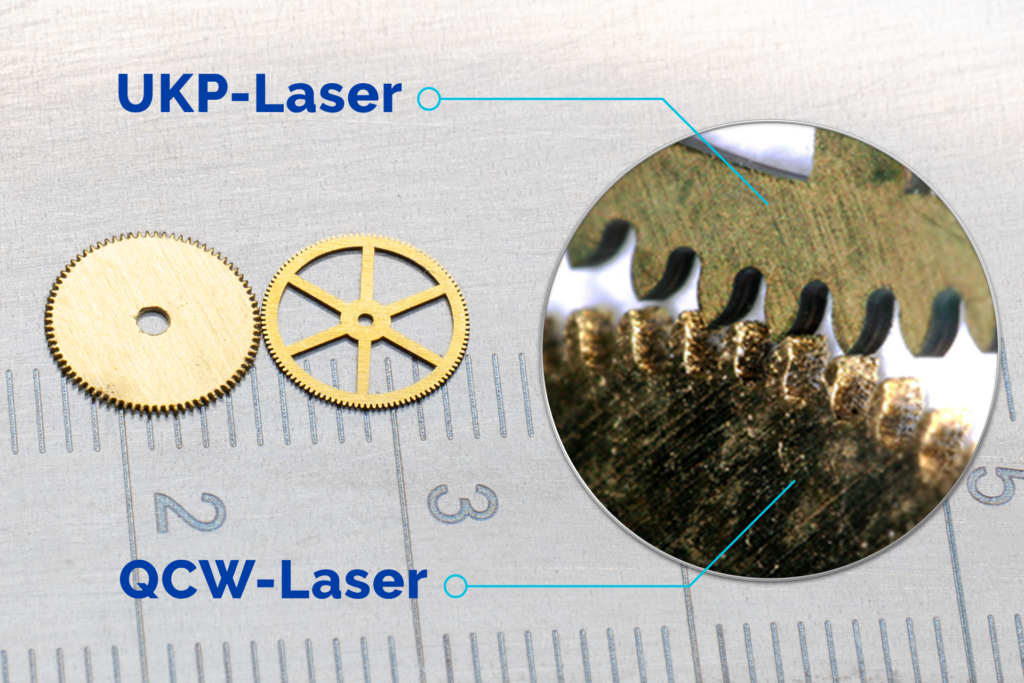
Proven for standard tasks. The longer exposure time causes the material to melt, which often requires additional work (e.g., grinding or polishing).
- Pulse duration: 10-9 s
- How it works: The material is heated to its melting point and vaporized.
- Result: A molten layer is formed, along with a noticeable heat-affected zone (HAZ). Mechanical or chemical post-processing (e.g., deburring) is often necessary to remove burrs.
Picosecond lasers (ps): The bridge technology
A significant improvement in precision compared to the nanosecond laser. Heat generation is already greatly reduced, offering an optimal price-performance ratio for many industrial applications.
- Pulse duration: 10-12 s (one trillionth of a second).
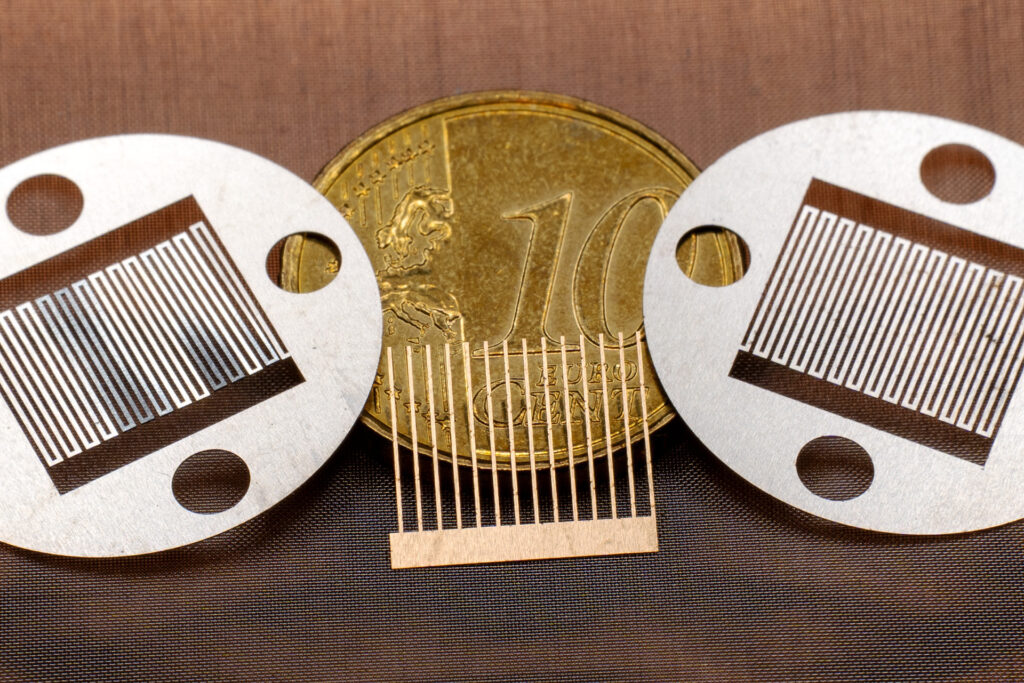
- Functionality: Virtually burr-free, significantly reduced thermal impact compared to ns lasers. The energy is delivered so rapidly that the formation of molten material is minimized.
- Applications: Ideal for applications requiring high precision where the use of a femtosecond laser is not yet economically necessary.
Femtosecond laser (fs): The ultimate in USP technology at KMLT®
The cutting edge of what is technically feasible in industrial mass production. By virtually eliminating the melting phase, we achieve maximum precision with minimal, negligible thermal stress—a critical factor for high-performance components in medical technology and micro-optics.
- Pulse duration: 10-15 s (one quadrillionth of a second).
- How it works: “Cold” ablation occurs through direct sublimation. The material immediately transitions from a solid to a gaseous state without melting.
- Advantage: Absolutely residue-free results, no oxidation, and the highest edge quality in the sub-micrometer range. Even the most temperature-sensitive materials or transparent substances (such as glass or polymers) can be processed perfectly.
Request a quote for USP laser processing