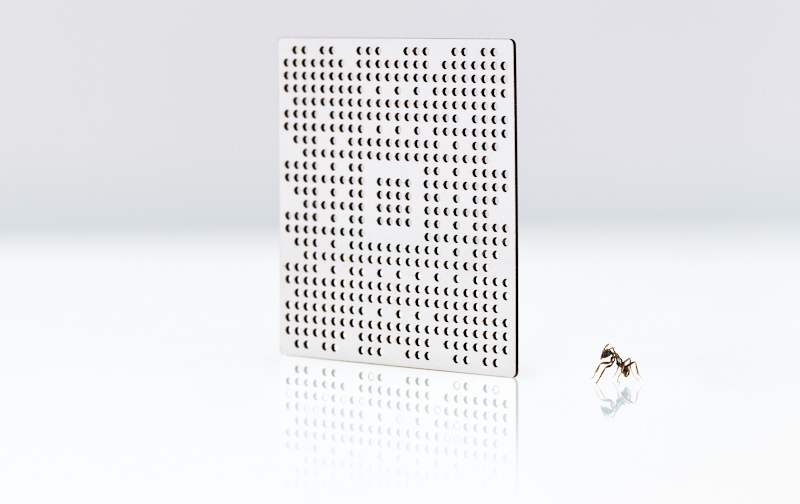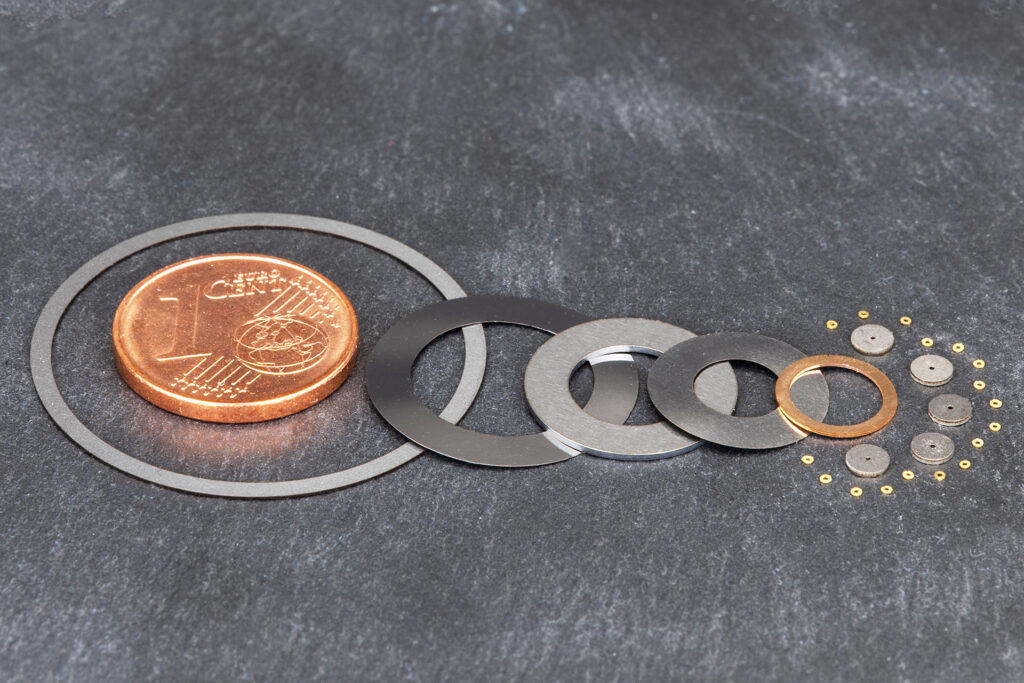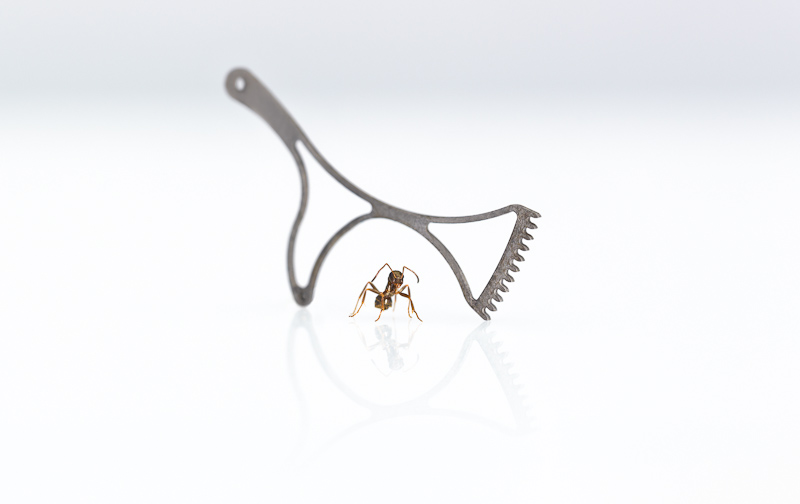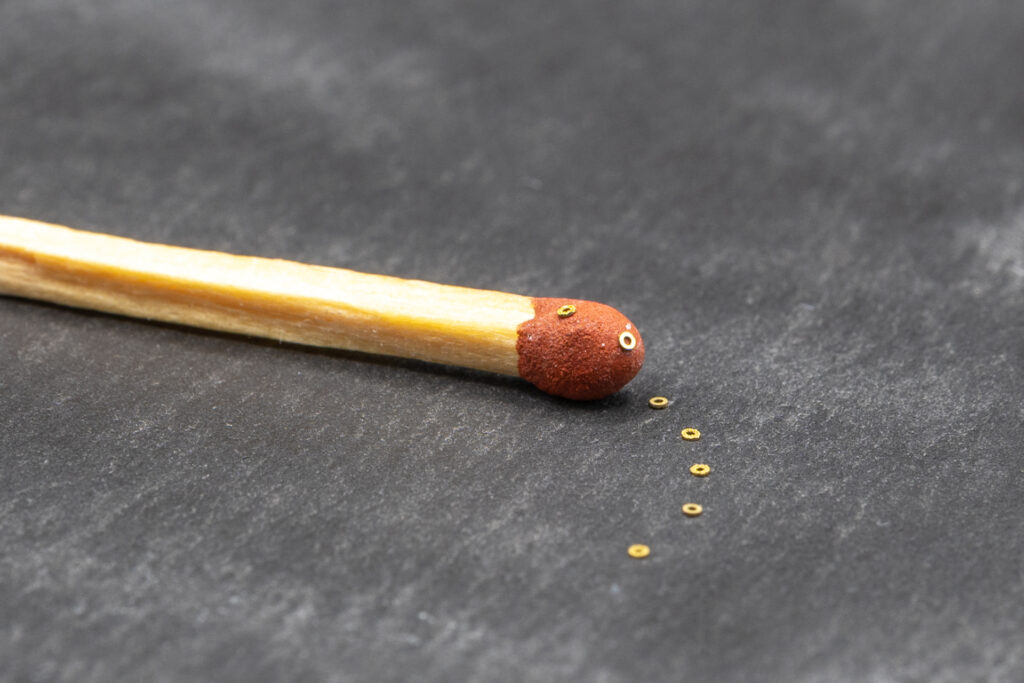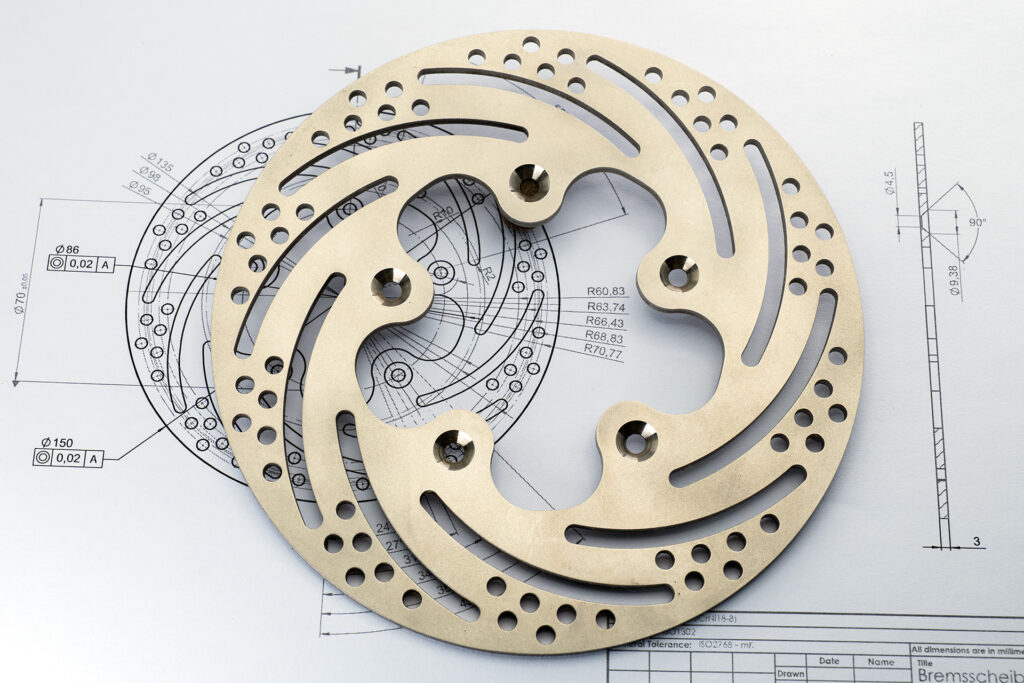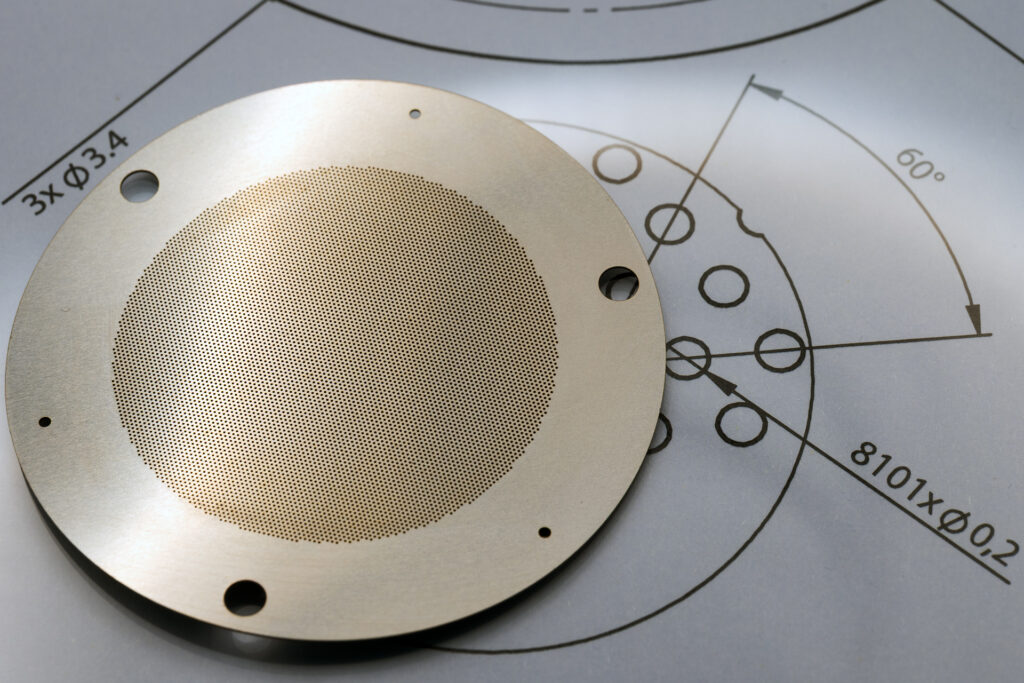
Laser micro-cutting is a non-contact, high-precision cutting process that uses precisely focused laser beams to make extremely fine cuts in a wide variety of materials. It is used wherever comparable conventional mechanical technologies reach their limits—for example, in medical technology, microelectronics, the watchmaking industry, and aerospace. The process is based on the targeted focusing of a laser beam onto the workpiece, causing the material to heat up intensely in a localized area. Depending on the type of laser or laser source used—diode, fiber, or solid-state lasers, short-pulse or even ultrashort-pulse lasers with pulses in the femtosecond range—the material at the processing site vaporizes or melts without causing significant thermal effects on the surrounding areas, as is the case, for example, with ultrashort-pulse lasers.
Supporting process gases such as nitrogen or oxygen serve to remove the resulting molten material from the cut and to further improve the cut quality.
Request a quote for your project
The distinctive feature of laser micro-cutting lies in its extremely high precision: cut edges can be produced with tolerances of just a few micrometers, often with a surface finish that requires no post-processing. The surface roughness of the cut edge can reach values of Ra 0.2 µm or better. Burr formation is also minimal, making the process particularly attractive for applications that require the highest precision and cleanliness. The material thicknesses that can be processed range from wafer-thin films to several millimeters, depending on the material and laser power.
The process is suitable for a wide range of materials, including metals such as stainless steel, copper, aluminum, brass, titanium, and so-called “shape-memory alloys” like nitinol, as well as non-metals such as glass, ceramics, other brittle, hard, or delicate materials, and various plastics, all of which can be processed in a way that minimizes damage to the material. In medical technology, for example, surgical instruments, implants, and microscalpels are manufactured using this method. In microelectronics, the process is used to structure printed circuit boards or to manufacture sensors. The watch industry utilizes delicate gears, various movement parts, and watch hands manufactured with this technology. In this field, KMLT® produces components for globally renowned, prestigious watch brands from Glashütte, Switzerland and Austria, while in aerospace, complex precision components with sophisticated geometries are created.
Laser micro-cutting stands out clearly from other cutting methods—primarily due to its non-contact operation, which does not require any mechanical tools. This eliminates tool wear, which increases process reliability and reduces both manufacturing and maintenance costs. At the same time, the technology allows for exceptional design freedom: even complex geometries and delicate structures can be produced precisely and efficiently. The process’s high reproducibility ensures that consistently accurate results are achieved even in series production.
The combination of micrometer-level precision, broad material compatibility, and minimal thermal impact is particularly valuable. These characteristics make laser micro-cutting an indispensable tool in modern manufacturing—anywhere where the highest quality standards and the finest level of detail are required.