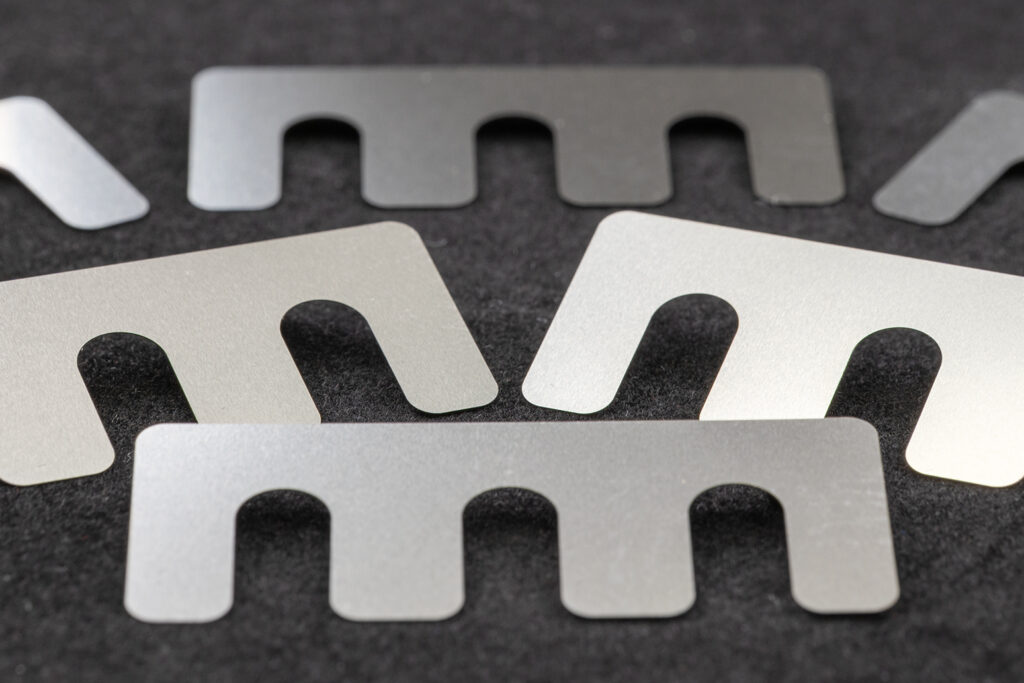
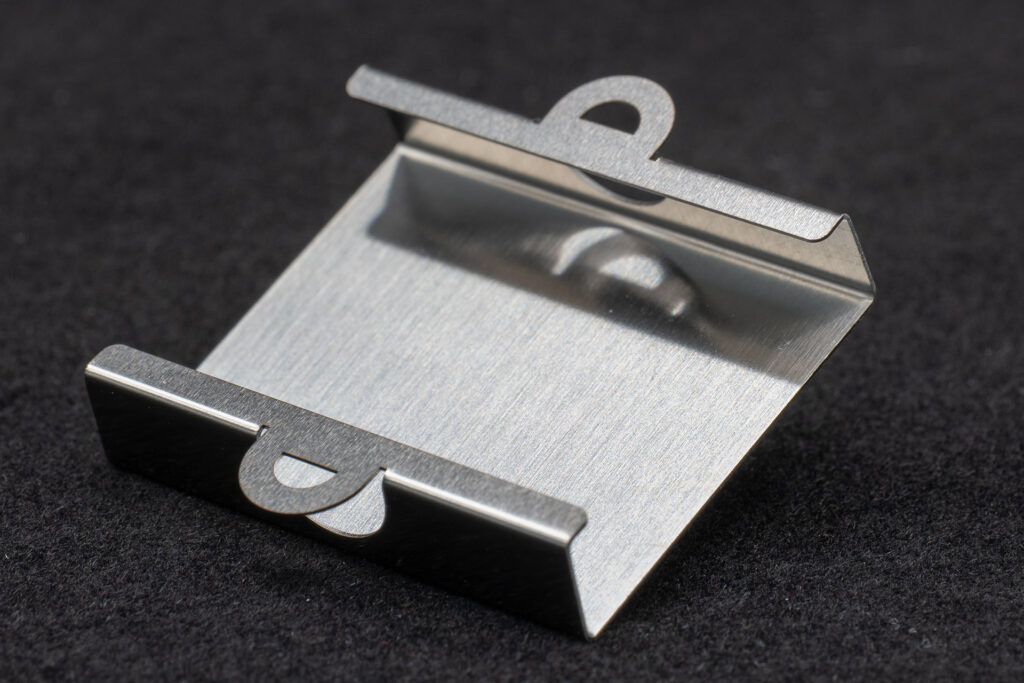
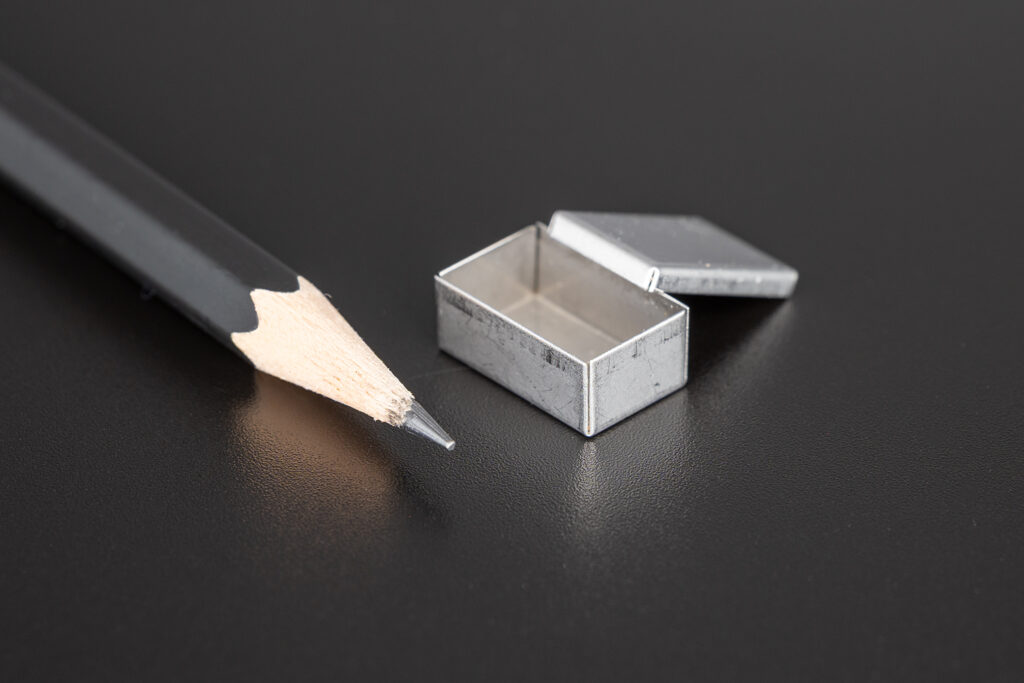
Laser fine cutting is a highly precise and material-friendly process for machining fine structures, characterized by its non-contact operation and excellent cut quality. Unlike mechanical cutting processes such as punching or milling, laser fine cutting causes no tool wear, no material wear, and no deformation of the workpiece. Instead, the material is locally heated by a focused laser beam and either vaporized or melted—depending on the pulse duration and material properties. Particularly effective for this are special, high-precision short-pulse lasers such as those used in KMLT®, which cause only very minimal thermal influence on the surrounding area of the workpiece, thus enabling machining without significant heat transfer to adjacent areas. And all this with minimal burr formation.
Request a quote for your project
A key advantage lies in the process’s high precision and repeatability. Even complex geometries, the finest holes, or delicate cutouts can be produced reliably and with virtually no burrs. The effective thickness range for components typically extends from about 0.1 mm to 3.0 mm, depending on the material and the laser source used. Thin metal foils, such as those made of stainless steel, aluminum, copper, or titanium, can be processed, as can thin-walled tubes or flat microcomponents made of materials such as plastic.
Typical applications are found in medical technology, where, for example, surgical microscalpels or implant components (stents) are manufactured from thin titanium tubes. In microelectronics, laser micro-cutting enables the production of high-precision SMD stencils, sensor housings, or shielding plates with precise openings in the submillimeter range. The process is also used in machine tool manufacturing, the automotive sector, and the jewelry industry, for example in the production of shims or precision parts for high-quality writing instruments.
The combination of micrometer-level machine precision and specially selected laser sources, broad material compatibility, and high process stability makes laser fine cutting a key process in modern manufacturing—anywhere where the highest quality standards and the finest level of detail are required.