Shielding plates and housing components

Precision in Metal - Custom Solutions

Foto

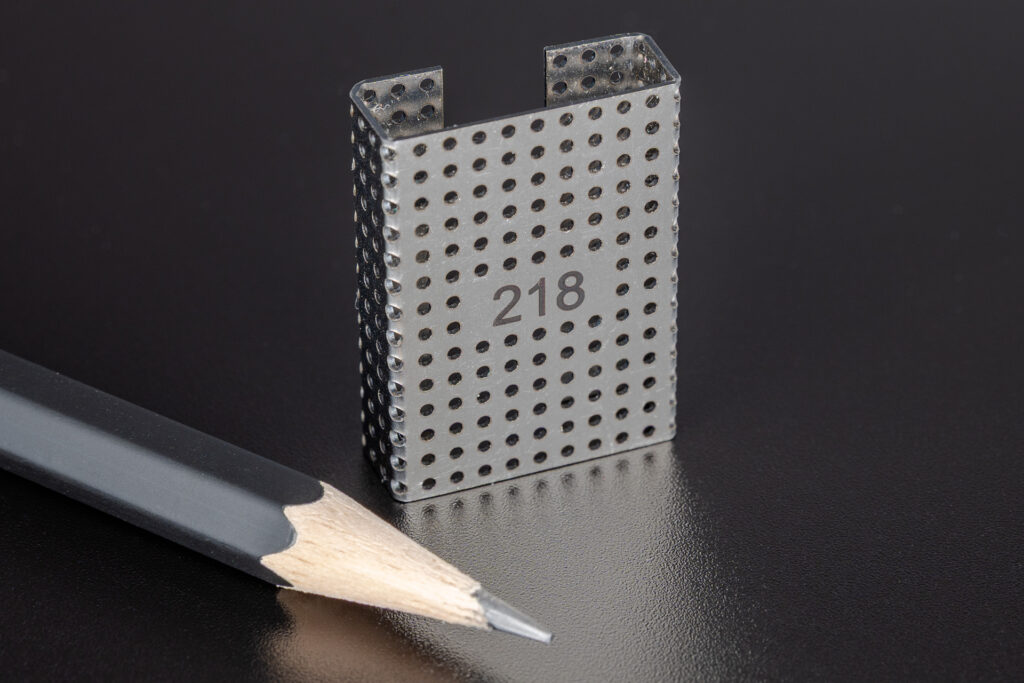
Custom-manufactured shielding plates and housing components—from delicate functional parts to complex assemblies.

Whether it’s a delicate shielding plate, a complex housing cover, or a custom fastening component: KMLT® manufactures sophisticated metal parts using state-of-the-art laser technology. From the initial product concept through prototyping to series production, we support you with precise machining and tailored finishing processes.

Your Benefits at a Glance

  • Custom manufacturing based on drawings and CAD data
  • Precise laser machining, even of delicate geometries
  • Combinable processes such as laser cutting, micro-bending, and laser welding
  • Flexible production of individual parts, prototypes, and series
Request prototypes or series parts

Our Solutions for Your Application

FotoFotoFotoFoto

By using state-of-the-art laser systems, including USP ultrashort-pulse lasers (femtosecond lasers), we guarantee burr-free cut edges and the highest dimensional accuracy without thermal distortion:

  • Material Thicknesses: From ultra-thin films starting at 0.005 mm (5 µm) to sheet material up to 3.0 mm.
  • Precision: Standard manufacturing tolerances of up to ±3 µm for the most demanding applications.
  • Edge quality: Virtually burr-free, clean cut edges that can be further refined through downstream surface finishing as required.
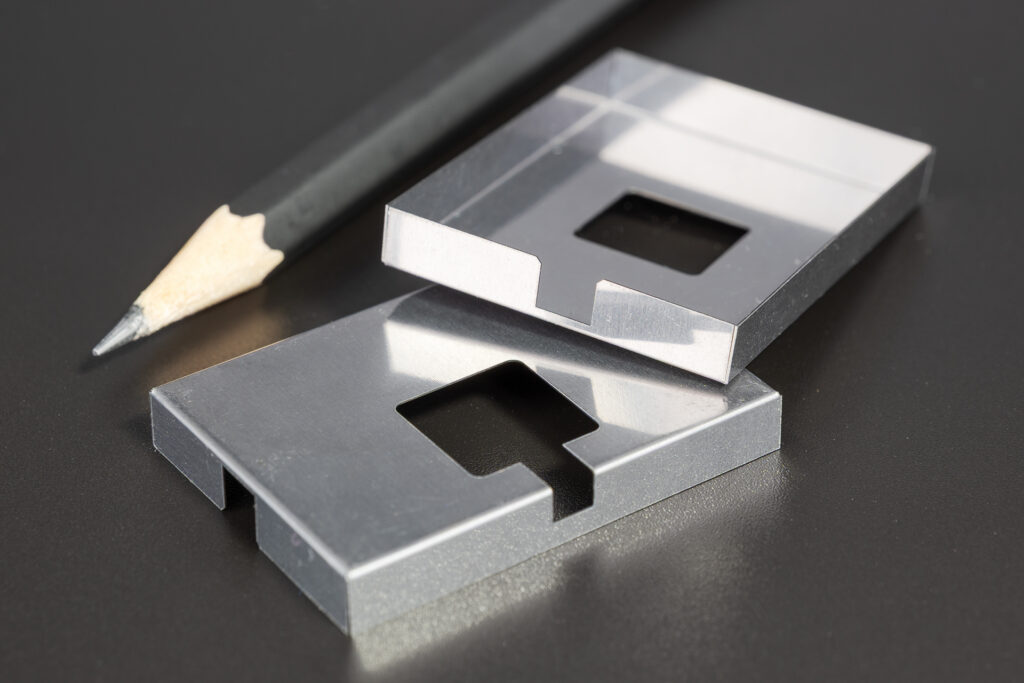
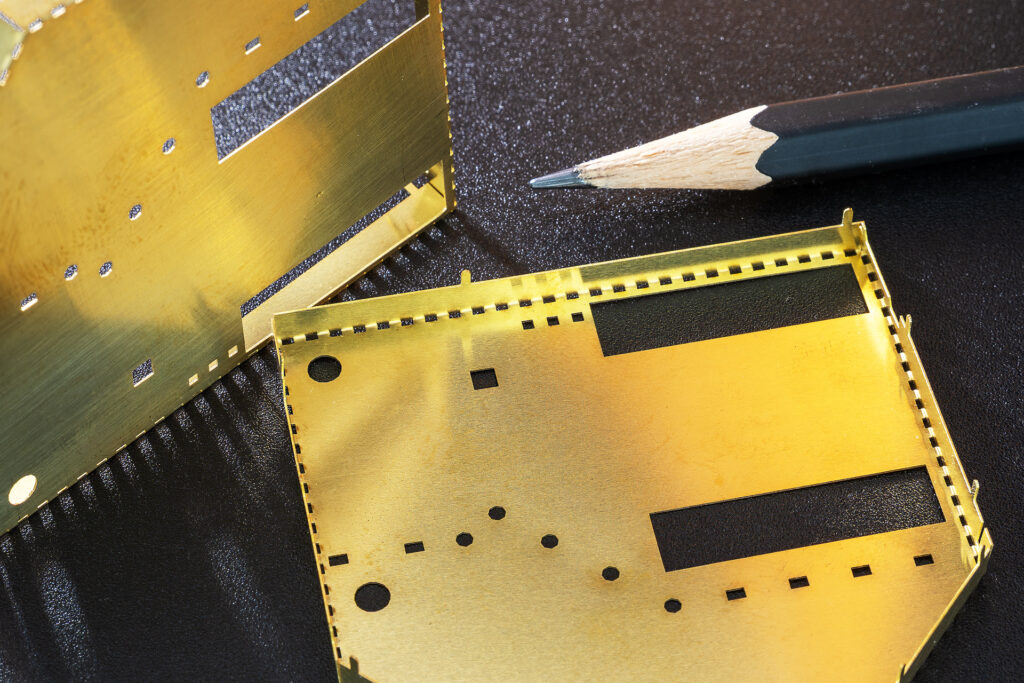
  • EMC Shielding Sheets

    Shielding components for electronic assemblies, designed according to your engineering specifications. Custom contours, cutouts, and openings ensure a precise fit for your application.

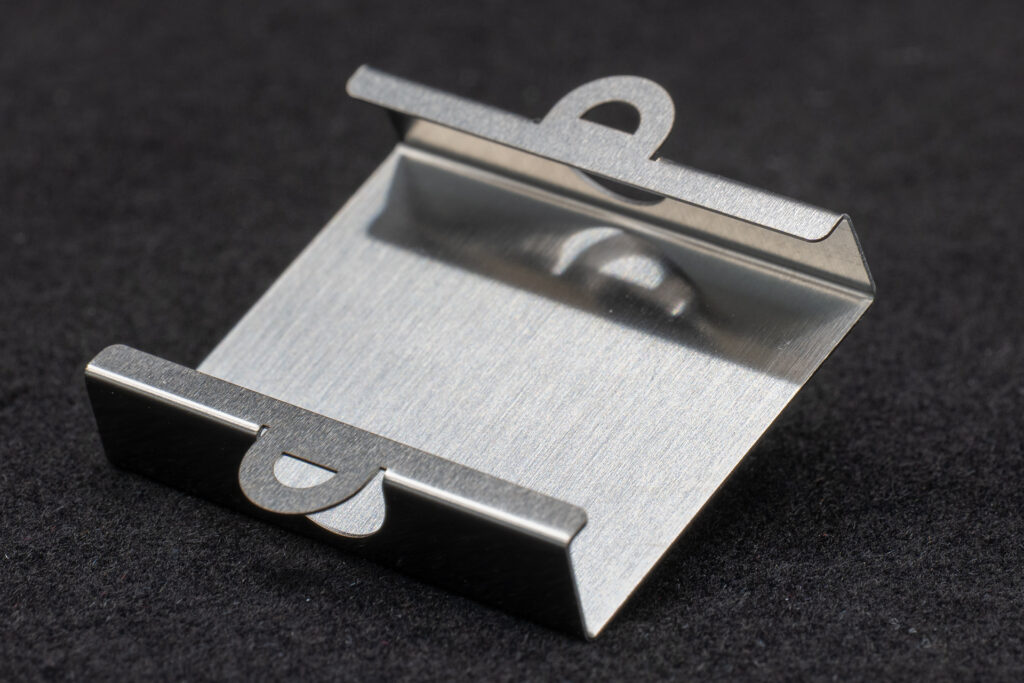
  • Housings and Covers

    Precision-machined metal components for compact devices, sensors, and electronic systems. Through a combination of cutting and bending processes, we produce components that can be integrated into your design.

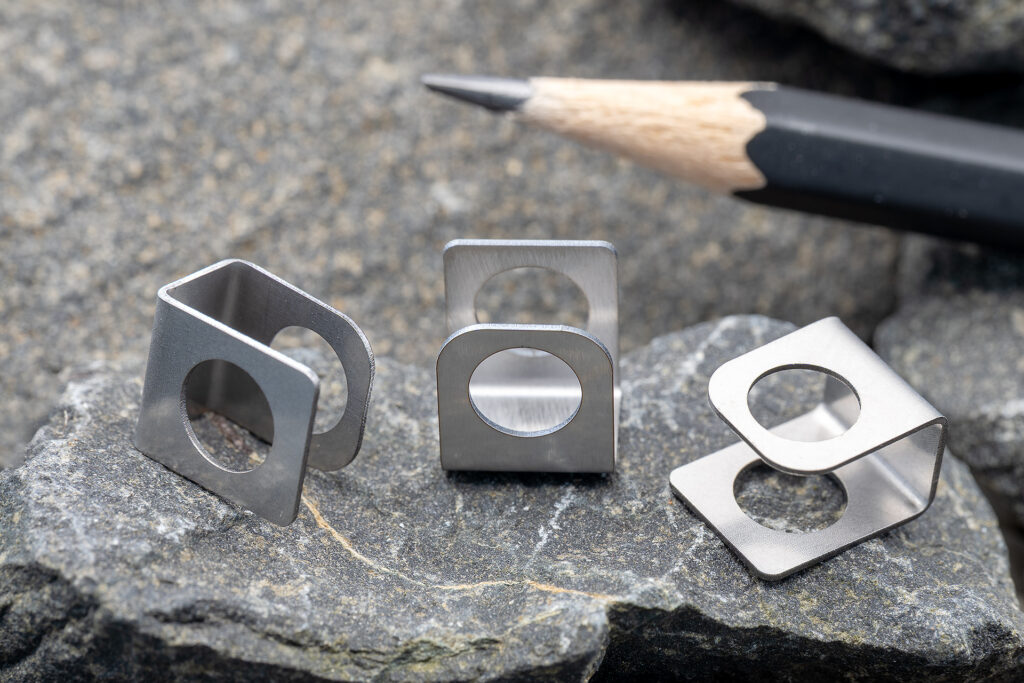
  • Contact, Retention, and Fastening Elements

    Funktionale Kleinteile für die sichere Montage und Verbindung elektronischer Baugruppen. Wir fertigen individuelle Geometrien nach Zeichnung und technischen Anforderungen.

From Drawing to a Ready-to-Install Component

  • Understanding Requirements
    You provide us with your drawings, CAD data, and technical requirements.
  • Coordinating Production
    We assess feasibility and coordinate the choice of material, material thickness, and suitable machining processes with you.
  • Precision Manufacturing
    Depending on the component, we use laser fine cutting, laser micro-cutting, micro-bending, and, if necessary, laser welding.
  • Further Processing and Inspection
    Upon request, we can add appropriate surface treatments and tailor the quality inspection to your requirements.

Request a quote for your project now

Your design. Our precision.

Do you need a custom shielding plate, an enclosure component, or a complex precision part for your electronics?

Send us your technical documentation. We’ll review the manufacturing options and advise you on the best way to implement your project.

Contact us now for a no-obligation quote.

Your Benefits with KMLT®

  • More than three decades of experience in laser micromachining and contract manufacturing.
  • State-of-the-art machinery, including 26 specialized laser systems at two locations in Saxony (Dresden and Neukirch/Lausitz).
  • Maximum flexibility: Fast and cost-effective production without tooling costs—ideal for rapid prototyping and series production.
  • Everything from a single source: From data preparation and laser cutting to precise surface finishing and metrological quality control.

FAQ – Shielding and Enclosure Components from KMLT®

What shielding plates and enclosure components does KMLT® manufacture?

KMLT® manufactures custom metal components according to technical specifications. These include shielding plates, housings, and covers, as well as delicate functional, contact, and fastening elements. The components are designed for specific applications and manufactured to customer specifications.

For which applications are these components suitable?

Our precision components are used wherever complex geometries, small dimensions, and precise manufacturing are required. Potential areas of application include the electronics industry, sensor technology, measurement and control technology, precision engineering, and other industrial applications.

Can shielding plates and enclosures be manufactured according to drawings or CAD data?

Yes. Manufacturing can be carried out based on technical drawings and appropriate CAD data. This allows contours, cutouts, openings, and other design details to be tailored specifically to the respective application.

What materials can be processed?

Depending on the component and manufacturing process, suitable materials may include, for example, stainless steel, aluminum, copper, brass, and other appropriate metals or alloys. The most suitable material depends, among other things, on the mechanical, thermal, and functional requirements.

What material thicknesses and tolerances are possible?

The achievable material thicknesses and manufacturing tolerances KMLT® offers a variety of laser processing methods for demanding precision components. The specific options are evaluated based on the technical requirements.

What manufacturing processes are used?

Depending on the design, laser fine cutting, laser microcutting, microbending, and laser welding can be combined. The choice of processes depends on the desired geometry, the material, and the requirements for the finished component.

Are prototypes or small production runs also economically viable?

Yes. Manufacturing capabilities can be tailored to different project phases—from the production of initial samples and prototypes to mass production. The specific quantity and the most cost-effective manufacturing strategy are determined on a case-by-case basis.

What information is needed to submit a request?

Technical drawings or CAD data, along with information on the material, material thickness, desired tolerances, and required quantity, are helpful. Information on the intended application and any special functional requirements also aids in the technical evaluation.